

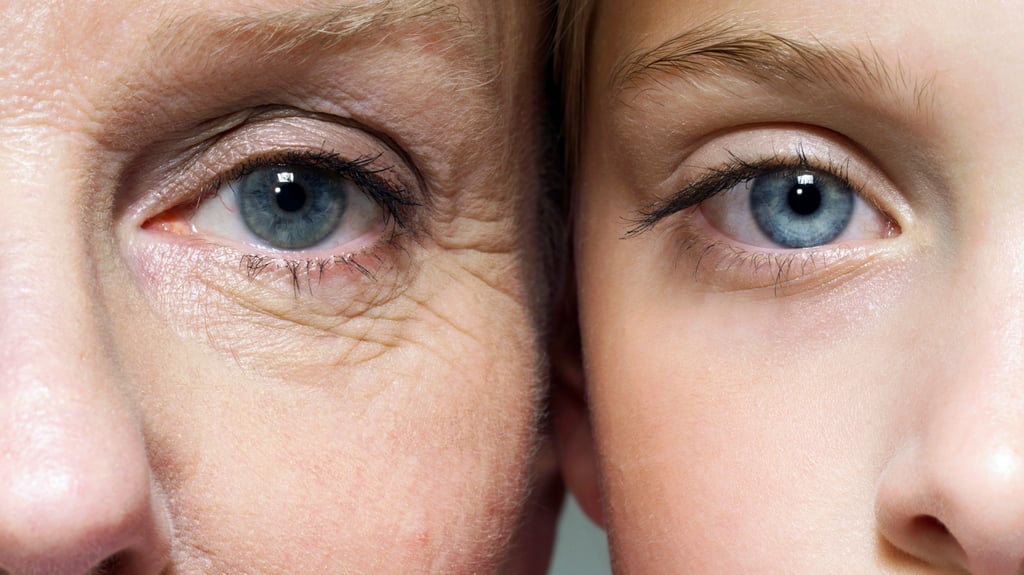
You are 55 years old. How old do you feel?
David Sinclair: I feel like I’m 18. Actually—maybe even younger. Because when I was 18, I didn’t pay nearly as much attention to my body or my stress levels as today. Honestly, I’ve never felt as young as I do now.
This feeling can also be measured scientifically: through biological age, determined by changes in our DNA.
Yes, there are various tests for that. On average, they place me about ten years younger than my chronological age.
What do you do to achieve that?
Phew, it would take about three hours to tell you everything.
How about a short version?
It all starts with a healthy lifestyle. I move a lot, go for regular walks, do strength training and cardio three times a week. I also practice relaxation techniques. I watch my weight, eat mostly plant-based, avoid red meat, eat fresh and organic foods, don’t smoke, and don’t drink alcohol.
Not even a supposedly healthy glass of red wine?
I actually used to. Grapes—and therefore red wine—contain resveratrol, a compound with anti-inflammatory and life-extending properties. But drinking alcohol for that reason was a mistake. Today I take resveratrol in powdered form. And let’s not forget: I do intermittent fasting.
That means taking long breaks between meals. How does that slow down aging?
Our research has shown that during fasting—similar to exercise—the body switches into a kind of survival mode and activates certain longevity genes, especially a group called sirtuins. Fasting also increases NAD+ levels—molecules that sirtuins need to function. But if you’re eating all the time—three meals a day plus snacks—those genes stay largely inactive.
What’s the mechanism behind the life-extending effect of sirtuins?
In 1997, while working in Leonard Guarente’s lab at MIT, we discovered that sirtuins control the gene-regulating machinery—and that they help steer the aging process in yeast cells. That was a breakthrough. It showed that aging isn’t just about genes, but also about how those genes are read. This insight forms the basis of what I call the «Information Theory of Aging.» It says that aging mainly happens because cells gradually lose their ability to properly read the «instructions»—not because the instructions themselves are damaged.
You started working with yeast cells. Was it your goal even back then to help people live longer, healthier lives?
Absolutely. By the time I was 17, I had realized that very few people were seriously studying aging. I found that shocking. Actually, my interest started even earlier: When I was four years old, my grandmother explained to me that everything dies—including my pet. That really shook me—and I never got over it. I found it unbearable that conscious beings like us should simply die. That’s why I’ve dedicated my life to this mission.
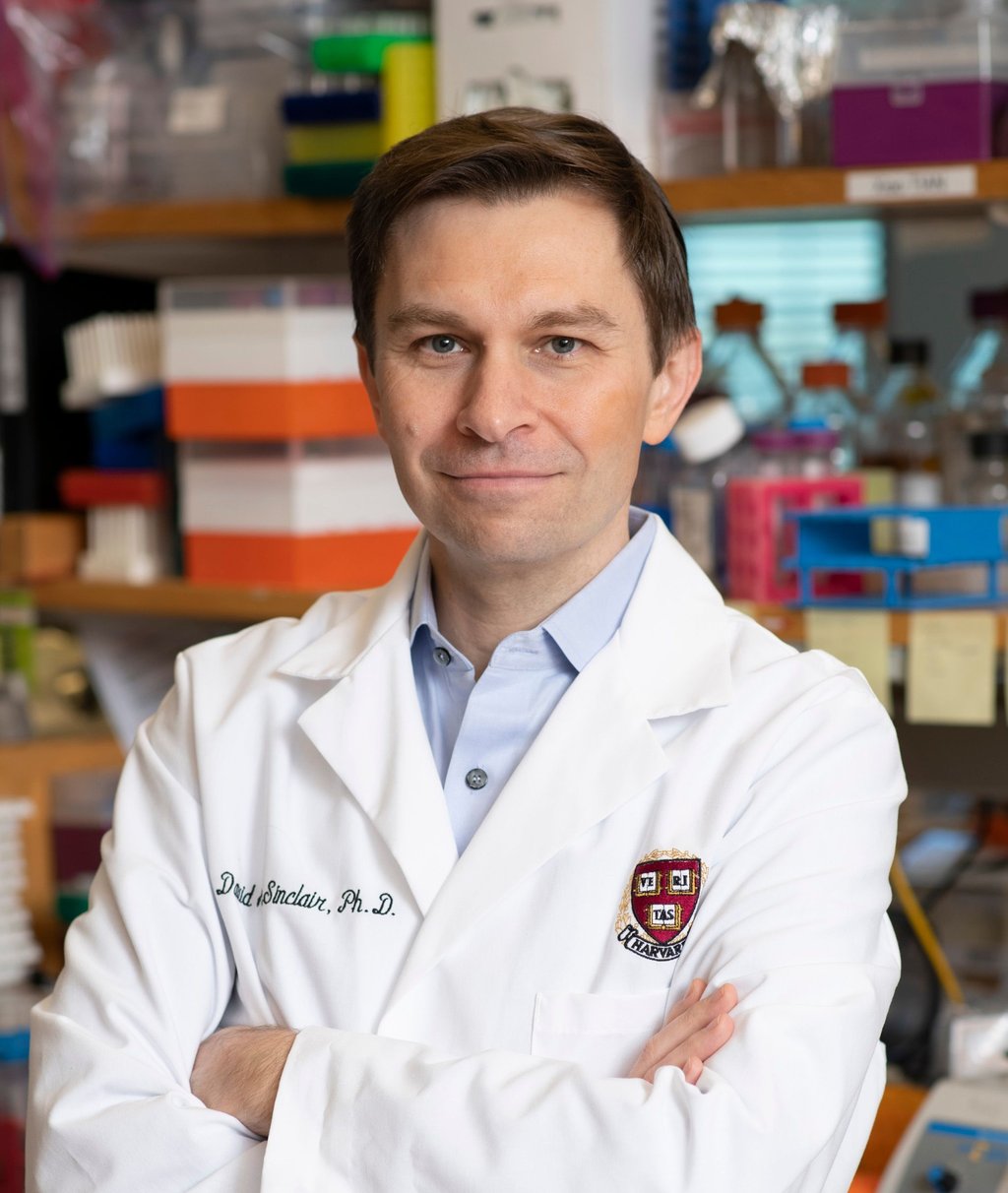
The Expert
About David Sinclair
David Sinclair, molecular biologist and geneticist, is a professor at Harvard Medical School. He is best known for his work on understanding why we age—and how to slow down the effects of aging. He has co-founded several biotech companies and is the author of the bestselling book Lifespan: Why We Age – and Why We Don’t Have To. On June 19, the 55-year-old will speak virtually about his research at the International Food Innovation Conference hosted by the Gottlieb Duttweiler Institute (GDI).
Tech billionaire Bryan Johnson, considered a longevity guru, takes more than 100 pills a day to fight aging. What about you?
I take a few supplements and medications to regulate my cholesterol and blood sugar levels. I also occasionally take rapamycin (a prescription drug that suppresses the immune system and is considered a promising anti-aging compound).
GLP-1 agonists like Wegovy—also known as «fat-loss injections»—are also said to prolong life. What’s your take?
They really do seem to offer more than just weight loss. They’ve shown clear positive effects on cardiovascular health—and even the brain. And in many cases, losing weight alone can already be life-changing.
What about people who aren’t overweight?
We don’t yet know whether these drugs extend life in non-obese individuals. I’ve tried them myself, but I clearly prefer exercise. Every drug has its risks. For GLP-1 agonists, muscle loss is one of them. If you take the drug, you should absolutely exercise as well to counteract that effect.
So there’s no getting around exercise?
That may sound hard to some people. Food tastes good, and exercise is exhausting…
…and many people say they don’t have time.
Time? I run a lab at Harvard, have six companies, and three kids. If I can make time for exercise, most people can too. It’s all about setting priorities. I block out fixed time slots for physical activity in my calendar—and I stick to them. For beginners, I recommend starting small: get a standing desk, walk to work, take the stairs.
How many healthy years can someone gain by following your advice?
An extra 15 years—that’s the low-hanging fruit. All you have to do is what any general practitioner would advise: don’t smoke, don’t drink, eat healthy, get enough sleep. If you add targeted measures—certain medications, supplements, optimized nutrition—you could gain 20 or even 25 additional years. Of course, individual luck still plays a role.
Because even healthy young people can get cancer.
Exactly. Lifestyle alone doesn’t guarantee protection from cancer. That’s why I encourage everyone to take preventive measures. Today there are DNA tests that can detect cancer extremely early. There are also imaging methods like full-body MRIs that can detect tumors before symptoms appear. I personally get a full-body MRI and a molecular blood test once a year. That gives me the chance to act early—before anything gets serious.
These kinds of screenings are controversial for the general public. Critics argue they produce false positives, overwhelm the health system, and lead to unnecessary procedures.
Two points. First: Many of these scans are paid for out of pocket—they don’t burden public health systems. And honestly, a yearly MRI costs less than a daily Starbucks coffee. I skip the coffee and invest in my health instead. Second: If you start early, you establish a personal baseline. If something changes the following year, you can compare it. That greatly reduces the risk of false alarms. And if I have to choose: I’d rather deal with a false alarm than discover cancer only after it has spread.
Still, false alarms can cause a lot of anxiety.
What scares me more is the idea that a tumor could be growing inside me—and I’d have no idea. Prevention gives me control. And that’s reassuring.
Is there anything you appreciate about getting older?
Of course. With age comes wisdom, calm, and experience. You can raise kids, pass on knowledge, enjoy life on a deeper level. I’m happier now than I was at 20. But getting sick is definitely not something I like about aging.
Some people say that life is only precious because it’s finite. What do you think?
Honestly? I think that’s nonsense. I’m not enjoying this conversation because I know I’ll die someday—I’m enjoying it despite that. The moment itself is what matters. You don’t live more fully just because you’re aware of your mortality. That argument doesn’t convince me.
Others say aging is a natural biological process. You, on the other hand, call it a disease. Why?
We’ll all eventually die of a serious disease—and that disease is aging. The conditions we usually consider deadly—heart disease, Alzheimer’s, cancer—are actually just symptoms of aging. Without aging, there would be far fewer cardiovascular events. And probably less cancer too, because younger immune systems are better at spotting and eliminating abnormal cells. We need to change our mindset: The real problem isn’t the diseases—it’s the aging that causes them.
Then aging should be treatable—like a disease?
That’s exactly our goal. My lab is working on drugs and technologies that directly target the aging process. In old mice, we’ve restored learning ability. We’ve also shown that we can treat multiple sclerosis through epigenetic reprogramming—and we’re making progress in ALS and Alzheimer’s. In mice, we’ve reversed age-related blindness. And Life Biosciences, the company I founded, has even managed to treat blindness in monkeys.
How far along are these technologies for humans?
We hope to treat the first patients early next year. The therapy involves a simple injection into the eye that activates three genes. If we’re right, we could restore lost vision.
That sounds promising—but it’s still very different from rejuvenating the entire body.
Of course. The eye is an ideal test case: it’s accessible and relatively isolated. But if it works there, it’s just the beginning. In animal studies, we’ve shown that this approach can rejuvenate muscle tissue, kidneys, skin, and other organs. Other research groups have even managed to rejuvenate entire mice—and extend their lifespan.
How many extra years are we talking about?
The mice lived about twice as long as normal—and in better health. And the best part: the method seems repeatable. We apply the treatment for two months, then pause for six months—and then reactivate it. That suggests aging isn’t just something we can slow down, but something we may be able to reverse repeatedly.
Sounds like immortality.
No, I wouldn’t go that far. But I do hope we can add several decades of healthy life. Right now, the record for human lifespan is 122 years. There’s plenty of room to grow. I believe people already living today could reach 150.
But if those final decades are spent with dementia or Alzheimer’s, that’s not exactly appealing.
Exactly—that’s why one of my top priorities is to keep the brain young. If we find that a compound rejuvenates the body but not the brain, we abandon it. Healthy aging benefits society too. It used to be that the grandson pushed the grandfather’s wheelchair through the nursing home. I want a future where it’s the other way around—where grandparents support their families and take an active role. That’s not just socially valuable—it’s economically smart.
What do you mean by that?
Together with two economists, I calculated the economic value of just one additional year of healthy life for the entire U.S. population. The result: 86 trillion dollars. Ten years would be worth 365 trillion—nearly ten times the world’s GDP. That shows longevity isn’t just a medical revolution—it’s an economic opportunity. And that’s not limited to the U.S. Many countries are facing demographic challenges. Europe is in crisis, so is China. If we want to manage these shifts, we need people to stay healthy and productive for longer.
In Switzerland, life expectancy is already over 83. But people retire at 65. That doesn’t add up—especially if life expectancy rises to 100. What do you propose?
Sweden has the solution: The Swedish parliament has decided to link the state pension age to life expectancy starting in 2026.
Science in the U.S. is increasingly under pressure under President Donald Trump. Your university had billions in research funding frozen for resisting political pressure. Has this affected your work?
Oh yes. Just recently, the U.S. government completely cut funding for my Harvard lab. And not just mine—all research labs at Harvard Medical School. The situation is serious. The current congressional budget proposal includes a 40 percent cut to medical research funding. If that passes, aging research in the U.S. will be severely crippled. We’re witnessing a dangerous wave of anti-intellectualism. Science is under attack—including mine.
What are you doing about it?
I’m launching a new podcast soon to raise awareness about my research. And I’m starting to raise funds independently.
So you’re just waiting for a new president to take over in four years?
I’m afraid the problem is bigger than Trump. U.S. society is deeply divided. There’s resentment toward elites—and toward universities. The value of medical research is not being recognized. And as a result, millions of people will die. That’s a fact.
Would moving to another country—like Switzerland—be an option for you?
Some of my colleagues are seriously considering returning to their home countries. I’m still trying to build awareness and funding in the U.S. For now, I’ve posted this on social media: «We will not go down without a fight!»


